Tuesday, January 21, 2014

Google Redesigns AdWords To Match Its Other Web Apps

Google’s AdWords now sports a much-needed update that brings its design up to par with most of the company’s other web apps.

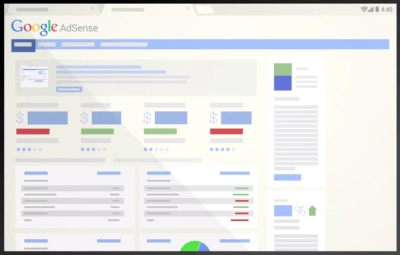
Most of Google’s services, including Gmail, Drive and Analytics, now sport the company’s new, flat look. Even after a few years of going through this process, however, some apps still look just like they did back in 2011. Both AdSense and AdWords, the publisher and advertiser back ends to the company’s most important revenue sources, were among the services that were left behind in the first waves of the redesign.

AdSense started testing a new homepage last November and it got a bit of a facelift back in 2012, too.


With today’s change, AdWords’ interface now looks more like Gmail and also sports the same gear icon you find in most of Google’s consumer apps to get to the settings menu. Of course, it will also feature the same colors and other design elements that are now part of Google’s design language for web apps.

If you’ve spent some time in Google Analytics, this new look will feel pretty familiar (though Analytics still uses Google’s old menu bar). Google says this change is also meant to provide more real estate to the most important tools in AdWords and for the charts and tables most users rely on to track their ad campaigns.

As part of this update, Google has also made it easier to see who else is currently signed into your account.

Google Launches AdSense Direct, A New Tool For Direct Ad Sales


Google today launched AdSense Direct, a new tool for publishers who – as the name implies – want to sell ads directly and aren’t large enough to make dealing with the complexities of DoubleClick for Publishers worth their while.

This puts it into direct competition with iSocket, BuySellAds and other services that make it easier for smaller publishers to sell ads directly. This also marks Google’s first foray into this area of the advertising business for small publishers. AdSense, after all, has always been about programmatically choosing ads to display on a given site based on the content on the site and Google’s knowledge of what a specific reader is likely interested in.


With AdSense Direct, which is currently only available in the U.S., publishers can make deals with individual advertisers – no matter whether the publisher is on AdWords or not. Publishers can simply give potential advertisers a link to their AdSense Direct page and all the publishers have to do is upload their creative and pay for the ad.

Google takes a 15 percent cut from all AdSense Direct transactions. All invoicing and billing is handled through Google Wallet.

There are no upper or lower limits for the number of impressions served through one of these campaigns, by the way. Advertisers simply buy the space for a given day or longer time period, though campaigns can’t last longer than 90 days.

As a site becomes more popular, direct ad deals tend to be far more lucrative than just running basic AdSense ads. Google recommends a price when publishers set up a new campaign and the company says its research has shown that publishers can generally charge about 2.5x the price of a standard contextually targeted ad.

Yahoo Acquires Mobile Marketing Startup Sparq


Mobile marketing company Sparq announced on its site today that it has been acquired by Yahoo. The company did not disclose the purchase price.

Yahoo declined to illustrate the deal’s financial details. Sparq’s team will be joining Yahoo’s Sunnyvale campus.

Before it was acquired, Sparq raised a total of $1.7 million over several small rounds, most recently picking up more than $650,000 last year.

According to a Yahoo spokesperson, the company’s technology helped users “jump from app to app to discover, consume and engage with content.” Or, put more simply, it helped users take in more total mobile content.

The fit with Yahoo is quite plain: Yahoo needs to monetize its mobile user base if it wants its mobile-first strategy to drive lacking revenue growth. Picking up a firm that specializes in that space is reasonable.

And, given how little the company raised, it was likely a cheap pick-up for Yahoo.

Given Sparq’s focus on inter-app movement, Yahoo might be able to deploy its technology to help its users move between its own stable of applications. It isn’t clear if the company’s assets will be used in that fashion. However, if Yahoo could lash its apps together in a more cohesive fashion, it could bolster its engagement per user, and presumably its revenue per user. For a company that is forcing Wall Street to remain patient in the face of its slipping top line, such increases would be welcome indeed.

Friday, December 20, 2013

When Apple Unveiled the iPhone, Google Had to 'Start Over' on Android

Apple-iphone-jobs

When Apple released its iPhone in January 2007, it changed smartphones forever. Competitors who were able to adapt to the new normal, like Samsung, have thrived, while others who moved too slow, like BlackBerry and Nokia, have had a tougher time.

Google, owner and operator of the Android platform, was one of the first to recognize just how important the iPhone was, a new book reveals. Google engineer Chris DeSalvo says as soon as Steve Jobs revealed the iPhone to the world, he knew the Android team would need to "start over," according to Dogfight: How Apple and Google Went to War and Started a Revolution by Fred Vogelstein, which was excerpted in The Atlantic.

SEE ALSO: 25 Best Free Android Apps

“What we had suddenly looked just so... '90s,” DeSalvo said. “It’s just one of those things that are obvious when you see it.”

For the six months before the iPhone unveiling, DeSalvo, Android chief Andy Rubin and the rest of the Android team had been working on the platforms prototype phone. A launch was planned for the end of 2007. All of those plans were scrapped in the wake of the iPhone. All of those plans were scrapped in the wake of the iPhone.

While the software for the prototype had many of the hallmarks of what we now know as Android — mainly cloud connectivity and multitasking — the phone itself was "ugly," the book says. It looked more like a BlackBerry than the sleek piece of metal and glass that Steve Jobs had just unveiled.

The Android team quickly switched gears to focus on a phone with a touchscreen, which would eventually become the HTC Dream (aka T-Mobile G1 in the U.S.A.). The launch was pushed back to fall 2008, months after the second-generation iPhone would go on sale, the iPhone 3G.

7 Tips for Improving Your Ecommerce Strategy

E-commerce

As customers increasingly turn to the Internet and smartphones for purchasing decisions, economies are seeing brick and mortar evolve into "click and order," and ecommerce become intertwined with m-commerce.

More and more businesses are expanding online — from grocery stores to "beer grams," almost any product or service is available via the click of a button or the swipe of a finger. What's more, studies show [PDF] online customers are exceedingly loyal — perhaps even more so than customers who shop in-store.

SEE ALSO: 10 Predictions About the Future of Ecommerce

For businesses breaking into the ecommerce space, the process can be a bit of a whirlwind. Ecommerce presents countless opportunities for retailers and brands, so businesses seeking to take advantage of the benefits must also address some tough decisions — site design, mobile and social media strategies, customer service and product pricing, to name a few.

We've talked to entrepreneurs and marketers about some of the keys to driving ecommerce. Here are seven best practices for your ecommerce strategy.

1. Create a User-Oriented Experience

When your customers can't physically see and touch the products you're offering online, convincing them to break out their credit cards can be a harder sell. Pricing products appropriately and delivering a user-friendly, all-around personalized experience is one way to encourage customers to fill their digital shopping carts.

Luvocracy is an online platform dedicated to helping shoppers find products they'll love via recommendations from "trusted tastemakers." CEO Nathan Stoll says that one of the reasons the platform is successful is because of the feel-good experience of providing quality recommendations to likeminded users. "People want to feel good about the decisions they make, and feel like they matter through the help they provide to others. "People want to feel good about the decisions they make, and feel like they matter through the help they provide to others. Creating a place where those helpful moments are captured, shared, celebrated and easily allowed to cross from the digital to our physical lives is incredibly rewarding," says Stoll.

SEE ALSO: How ModCloth Went From a College Dorm to $100 Million a Year

"Design-with-a-purpose" site Zady places emphasis on aesthetics and UI to provide customers with the best possible online shopping experience. “Just as it is important to greet our customers with a firm handshake when we meet them in-person, on Zady.com, the same ethos of the 'handshake' applies. We work to make the design beautiful, easy to use, and entertainingly educational, illustrating through iconography and beautiful graphics that Zady is a purpose-driven company," says co-founder Maxine Bédat.

A user-oriented approach to ecommerce helps drive brand loyalty, which is crucial to the bottom line — almost no online retailers [PDF] can break even by relying on one-time shoppers. Personalizing users' experiences also helps businesses segment their audience, which can translate into more effective marketing via targeted advertising campaigns.

"To really engage with customers, you have to appeal to the emotional side of your users," says Andres Teran, co-founder of Toplist, a social shopping recommendation platform. "More than the age or the city you want to target, it’s important to look for people who share feelings and behaviors towards something. Once you know this, it’s easier to find what your target customer likes, uses, does and where to engage with him/her."

2. Design a Service You'd Want To Use Yourself

The best test subjects for an online business, app or ecommerce site are often friends, family and fellow team members. "Make your team test the service like your ideal consumer: If you can't use it pleasantly for an hour straight, it's not good enough. If your 99th percentile server performance isn't good enough, you will notice," says Luvocracy's Stoll.

Luvocracy

Chieh Huang, CEO of warehouse-club shopping app Boxed, encourages his team to put themselves in customers' shoes. "We built Boxed because it’s a service our entire company wanted to use ourselves," says Huang. "When the entire team is thinking like a customer, it shows in the final product." "When the entire team is thinking like a customer, it shows in the final product."

Alex Gonzalez, CEO and co-founder of Chatalog, a collaborative online shopping platform, knows about testing a business model close to home: "It was easy for us to identify our users and their pain points and then build a product to solve them because the original user was my wife and co-founder, Natalie. Our end customer is the shopper and, ultimately for me, the litmus test continues to be whether I catch Natalie using Chatalog every night with her friends and family when we supposedly have stopped working for the day."

3. Customer Feedback Is Crucial

Any business knows that customer service is part of the foundation for success, but small and medium businesses in particular rely on their customers for word-of-mouth promotion and brand loyalty.

Teran credits customer feedback for crucial decisions in the development of Toplist, and stresses the importance of listening to customer opinions and making adjustments accordingly. "Sometimes, we as entrepreneurs believe that the ideas we have and the products we build will be attractive for everyone — but it turns out you have to go out to the market, ask and try. You have to listen to your customers; what you're building is for them, so they will have a pretty good idea of what they need. At first, our product had too many features and functionalities that we thought were really cool — our users did not think the same. We noticed they wanted a simple product that would satisfy their needs fast and easy, so we set out to do that," says Teran.

Soraya Darabi, co-founder of Zady, agrees that listening to feedback on multiple channels is hugely important when making adjustments or introducing new products: “The community we are forming means everything to us. Customers' feedback, whether it comes in the form of a supportive email or a note on Instagram, Twitter or Facebook, is read and shared widely across our team. We listen to the feedback and react swiftly and accordingly."

Not only does customer feedback help businesses evolve and perfect their product or platform, Stoll says that listening to customers can also have a "juggernaut" effect when it comes to building a business. "Leverage the authentic voice of the customer. Your customers are dying to help you and be made to feel like they matter. They are the reason you succeed," says Stoll. "Rather than feeling like you're constantly trying to shock them into participating, make them feel good about what they do and the fact that they've decided to buy into your brand and product."

4. Utilize Social Media — But Don't Rely on it Exclusively

A social media strategy — particularly paid advertising and an engaging content strategy — can be an effective way to target audiences and drive traffic to your site. Sites and networks such as Pinterest, Etsy, eBay and Instagram are often hugely useful for ecommerce businesses of any size. Social is also a great way to get word-of-mouth momentum started, which is perhaps the most important method of launching a new site or platform to success.

social media apps
“Modern brands must embrace two-way communication online, there's just no question," says Darabi. "It's about remaining nimble to consistently learn from our customers, and to benefit from their sincere interest in helping us grow." Darabi tells Mashable that after granting a customer's request (via Instagram) that Zady begin selling dog gear, the items started flying off shelves. "We can't emphasize enough how listening well and using the appropriate channels to do so can help your business expand.” "We can't emphasize enough how listening well and using the appropriate channels to do so can help your business expand.”

Nathan Stoll shares another example of how social media word-of-mouth can have a "snowball" effect: "We discovered a conversation on Twitter where a Luv member asked her most-trusted beauty blogger to join Luvocracy. She wanted to start shopping all of the great recommendations her favorite blogger was making everyday. [The user] successfully got [the blogger] to join, and she quickly became 'addicted' to the experience. It's exactly how we want members to come into our community."

Jewelry brand Dannijo leverages social media in a unique way with a "Gram Hits" section on the website — it's essentially a shoppable Instagram gallery, comprised of Instagrams taken by Dannijo and their customers. Seeing a product in this environment — where the jewelry is styled and path to purchase is simple, makes a customer 3x as likely to convert, according to Dannijo's analytics.

While you want to excel on social media, it's important to note that focusing on social alone isn't enough. Many factors go into ecommerce success — and putting all your eggs in the social media basket is more than likely misguided. Social should be more than an afterthought — but it shouldn't constitute an entire business plan. "Consumer expectations are higher than ever; being present in all of the channels customers expect is now table stakes, but overall performance of the technology is equally important across all of them," says Stoll.

5. Invest In Mobile

It's becoming increasingly clear that ecommerce companies simply cannot afford to disregard mobile users. In fact, four out of five smartphone owners use their devices to shop.

"One thing is certain, go mobile or die trying," "One thing is certain, go mobile or die trying," says Toplist's Teran. "Mobile goes with you. Users can be engaged into making a purchase via a smartphone or tablet anytime and anywhere, so it’s crucial in the growth of ecommerce."

Teran suggests businesses take advantage of the entertainment or "me-time" value of smartphone culture, and points out that, as a more affordable and portable method of accessing a site than via laptop, mobile presents an opportunity to appeal to a larger market, especially in emerging markets. Additionally, a more interactive interface leaves room for creative methods of customer engagement. "We do not see mobile commerce as the future — we see it as part of the 'new normal,'" Teran says.

6. Incentivize Customers

Anyone with an Amazon Prime account will testify that incentivizing customers works. Whether the offer is a promotion, discount, or loyalty program for VIP customers, providing little extras for your customers can increase word-of-mouth promotion and build positive brand affinity.

Everlane is an online retailer that stresses transparency. Founder Michael Preysman says that the company got the ball rolling by rewarding its first customers. "We emailed our friends and family and said, 'Hey, Everlane is launching in five days — here's what we are. Invite 50 friends and you get free shipping for life.' And we had 600 people invite 50 friends. In total, we had 60,000 sign up in five days," says Preysman.

Chatalog's Gonzalez makes a point of rewarding customers for providing feedback, too: "We are maniacal about talking to as many of our users as possible. [My wife] Natalie literally offers each of our thousands of users a Starbucks gift card in return for talking to us."

7. Be Ever-Evolving

As the online marketplace evolves, so must businesses that want to stay a step ahead of the competition. Continuously listening to customers, keeping up with the latest trends, analyzing metrics and conducting vigilant research help companies stay up-to-date with emerging technologies and effective strategy. Experiment with new tools and make tweaks in real time to improve the experience for your users and the bottom line for yourself.

"There is no ecommerce, there's only commerce," says Stoll. "Instead of using a megaphone, use an inside voice and talk to the customers who already love you and tell them why you love them. Or change your product so they do."

Year-in-review-friends

Last year, Facebook gave users their own personal Year in Review. This year, the social network is turning the spotlight on users' friends.

Facebook added a separate Year in Review feature that highlights the top 30 moments and life events from users' Facebook friends.

SEE ALSO: 20 Things Your Most Annoying Friends Do on Facebook

Users can check out their own Year in Review by clicking on a "See Your 2013 Year in Review" button located below their profile picture. Once a user is at their own Year in Review page, they can click on a button labeled "Your Friends in 2013" to see the top moments from their Facebook friends.
Facebook Screen Shot

Facebook uses a different algorithm than the one that surfaces News Feed content. The Year in Review is made up exclusively of "life events and popular posts," according to a spokesperson. The "popular posts" are determined based on engagement like comments and Likes.

Users can also click on images of their friends featured at the top of the page in order to see that friend's personal collection of moments and posts. If a friend visits your Year in Review page, they will only be able to see the moments and posts that were shared with them throughout the year.

Windows Phone’s 2013: A Year In Perspective


Windows Phone, Microsoft’s smartphone platform has ground out its place at the mobile table employing a combination of tenacity, marketing dollars, improving firmware, and, at last, a world-class device lineup.

It has not been an easy road for Microsoft, who launched Windows Phone 7 Series straight from the ashes of Kin, a time in which your uncle had more credibility in the mobile market. It came to the public nearly 2 years before Windows 8 did the same, for perspective.

And yet, following the release of Windows Phone 8 at the end of last year, along with new hardware from Nokia that could match, at last, rival devices, Windows Phone has outlasted BlackBerry, made market share progress, bolstered its app store depth, and has more or less become the accepted third place mobile platform.

Or, as Paul Thurrott wrote recently, “We’re number three. And no, that doesn’t suck.” But is that right?

The Struggle

It is something like vindication to see Windows Phone walk on its own two feet. If you were around when user interface experiments landed on Zune helped set the groundwork for much of Windows Phone’s GUI, there is a historical element at play in this narrative.

And, personally, I loved the idea behind Windows Phone the first time we got a taste, eventually calling for Microsoft to release a Windows Phone tablet in the pre-Windows 8 days. They did, but they called it Surface.

Still, we need to be careful. That Microsoft has answered the  ”can we beat BlackBerry and become an accepted mobile player” question aside, most of its work still remains ahead of the company.

As Thurrott notes, Windows Phone ended 2012 with 2.8% global market share. It is concluding 2013 with 3.6%, a mere 28.57% increase in a year that we in the media are generally heralding as pivotal in the best possible sense for the company.

So, what gives? The mobile market is growing, and while Windows Phone is growing more quickly — hence its market share improvements — it is hardly tearing up the charts, and Android is increasingly taking on the mantle of smartphone hegemon.

Android

Thurrott details the precise issue that I think could constrain Windows Phone’s forward momentum, perhaps lowering a ceiling onto to how far it can grow in 2014 and beyond:

2013 was, alas, the year that Android became the Windows of the mobile world. Android surpassed 80 percent market share in Q3, which was a big story.

I completely agree with the above.

Here’s a question that you should have an answer to: If Android can show up late to Apple’s game, and utterly crush its market share around the world, what chance does the scrappy, and far smaller Windows Phone have?

It depends on what we decide to call success. Surely 5% market share is not success for Microsoft. 10% could be, but Apple won’t cede that space, and still builds the best smartphone hardware, while Android has been all but unstoppable in recent years. I again agree with Thurrott here, who says “Windows Phone needs double digit market share globally before we can truly declare success.”

So, where to next is my question for Windows Phone. If it manages another year of 28% market share growth, it will end 2014 with around 4.6% share of the global smartphone market. That’s soft, and won’t provide enough increased unit volume to really get developers excited.

So, Microsoft needs to greatly accelerate its unit volume to at once lower the gap between it and Apple — this would greatly drive developer interest, I think — and manage to slow Android before it becomes not just the de facto mobile smartphone platform, but merely that in fact.

So while we have seen a great year for Windows Phone, its new targets will be harder to mark than BlackBerry. In fact, you could very easily make the argument that Windows Phone’s ascent is almost the result of BlackBerry’s implosion, lessening its implicit internal momentum.

It is without a doubt that this moment is the healthiest we have ever seen Windows Phone. But as we shift the perspective from which we view it from the bottom up to the top down, scale changes, and we must now treat the platform as the want-to-be big player that it now is.